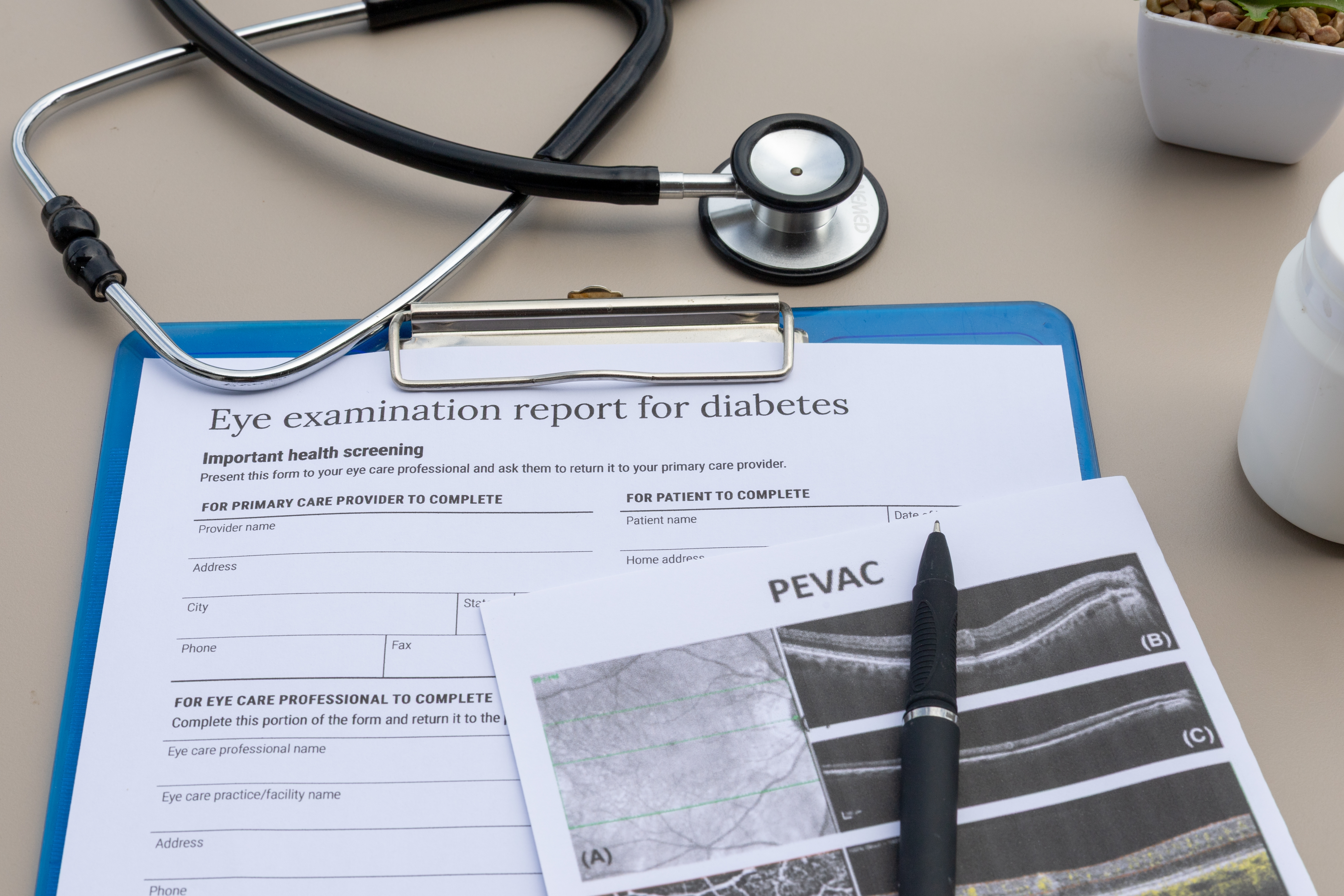
Diabetes can affect your eyes even when your vision still seems clear. Over time, elevated blood sugar can damage small blood vessels in the retina and increase the risk of diabetic retinopathy and other eye conditions. Regular diabetic eye exams are an important part of monitoring these changes before they significantly affect vision.
At Slate Canyon Eye Care in Provo, UT, we provide diabetic eye exams designed to evaluate the health of the retina and identify changes that may require closer monitoring or additional care.
Why Are Diabetic Eye Exams Important?
Diabetic retinopathy develops when diabetes damages blood vessels in the retina, the light-sensitive tissue at the back of the eye. During the early stages, you may not notice any symptoms.
That means clear vision does not necessarily confirm that the retina is healthy. A diabetic eye exam allows us to look for changes before relying on noticeable vision problems as a warning sign.
Diabetes can also increase the risk of cataracts and glaucoma, making comprehensive eye health monitoring especially important.
What Happens During Your Appointment?
Your diabetic eye exam begins with a review of your vision, medical history, diabetes history, medications, and any changes you have noticed. Let us know about blurry or fluctuating vision, new floaters, difficulty seeing at night, or other concerns.
During the examination, we may evaluate:
Your visual acuity and current prescription
Eye pressure as part of glaucoma screening
The retina and its blood vessels for diabetic changes
The macula, which provides detailed central vision
Other structures of the eye for additional health concerns
The specific tests we recommend depend on your health history and what we find during the examination.
Will My Eyes Be Dilated?
Slate Canyon Eye Care performs dilated eye examinations when appropriate for diabetic patients. Dilating drops temporarily enlarge the pupils so we can obtain a more complete view of the retina.
After dilation, your eyes may be more sensitive to light and your near vision may temporarily become blurry. These effects gradually wear off, although the amount of time varies from person to person.
Because diabetes can cause changes throughout the retina, dilation remains an important tool when a more extensive internal eye examination is needed.
How Does Retinal Imaging Help?
At our Provo practice, we also offer EIDON ultra-widefield retinal imaging. This technology captures detailed digital images of the retina and can document areas extending into the retinal periphery.
For patients with diabetes, retinal imaging can help us look for changes involving blood vessels and create a visual record that can be compared with future examinations.
EIDON imaging can often be performed without dilating the pupils, but it does not replace dilation in every situation. Depending on your medical history, symptoms, risk factors, or imaging findings, we may recommend both.
How Often Should You Have a Diabetic Eye Exam?
Your recommended examination schedule depends on your type of diabetes, previous retinal findings, overall health, and guidance from your medical providers. Many people with diabetes need a comprehensive dilated eye examination at least once a year, while patients with existing diabetic retinopathy may require closer monitoring.
Managing blood sugar, blood pressure, and cholesterol according to your healthcare team’s recommendations can also support long-term eye health.
Do not wait for your next routine appointment if you develop sudden vision loss, a rapid increase in floaters, flashes of light, or a curtain-like shadow in your vision. These symptoms require urgent evaluation.
If you have diabetes and are due for an eye health evaluation, contact Slate Canyon Eye Care at 1200 Towne Centre Blvd, Suite #11, Provo, UT 84601 by calling (801) 607-9718 to schedule your diabetic eye exam.
Helpful Articles
article_category: products
article_category: psychiatry
article_category: faqs
article_category: cats
article_category: general
article_category: services
article_category: technology
article_category: dogs
article_category: restorative
article_category: vision therapy
article_category: contact lenses
article_category: health
article_category: conditions
article_category: eye surgery co-management
article_category: exotic
article_category: cosmetic
article_category: surgical procedures
article_category: aesthetics
article_category: preventative
article_category: ocular disease management
article_category: eyeglasses
article_category: eye health
article_category: large animal
[]
Flowbite is an open-source library of interactive components built on top of Tailwind CSS including buttons, dropdowns, modals, navbars, and more.
Check out this guide to learn how to get started and start developing websites even faster with components on top of Tailwind CSS.

All Eye Care Services
Find personalized eye care excellence with our comprehensive services. From eye exams to advanced diagnostics, trust us for all your vision needs.

Keep In Touch
For non-urgent questions or to learn more about our services, contact us today!
© 2026 Slate Canyon Eye Care . All rights Reserved -
Accessibility Statement
-
Privacy Policy
-
Sitemap
Managed and Designed by 